Sunday Services
Morning service: 10.45am
Evening service: 6.00pm
Sunday Services
Morning service: 10.45am
Evening service: 6.00pm
Watch on YouTube
You can watch live services or older recordings on our YouTube channel
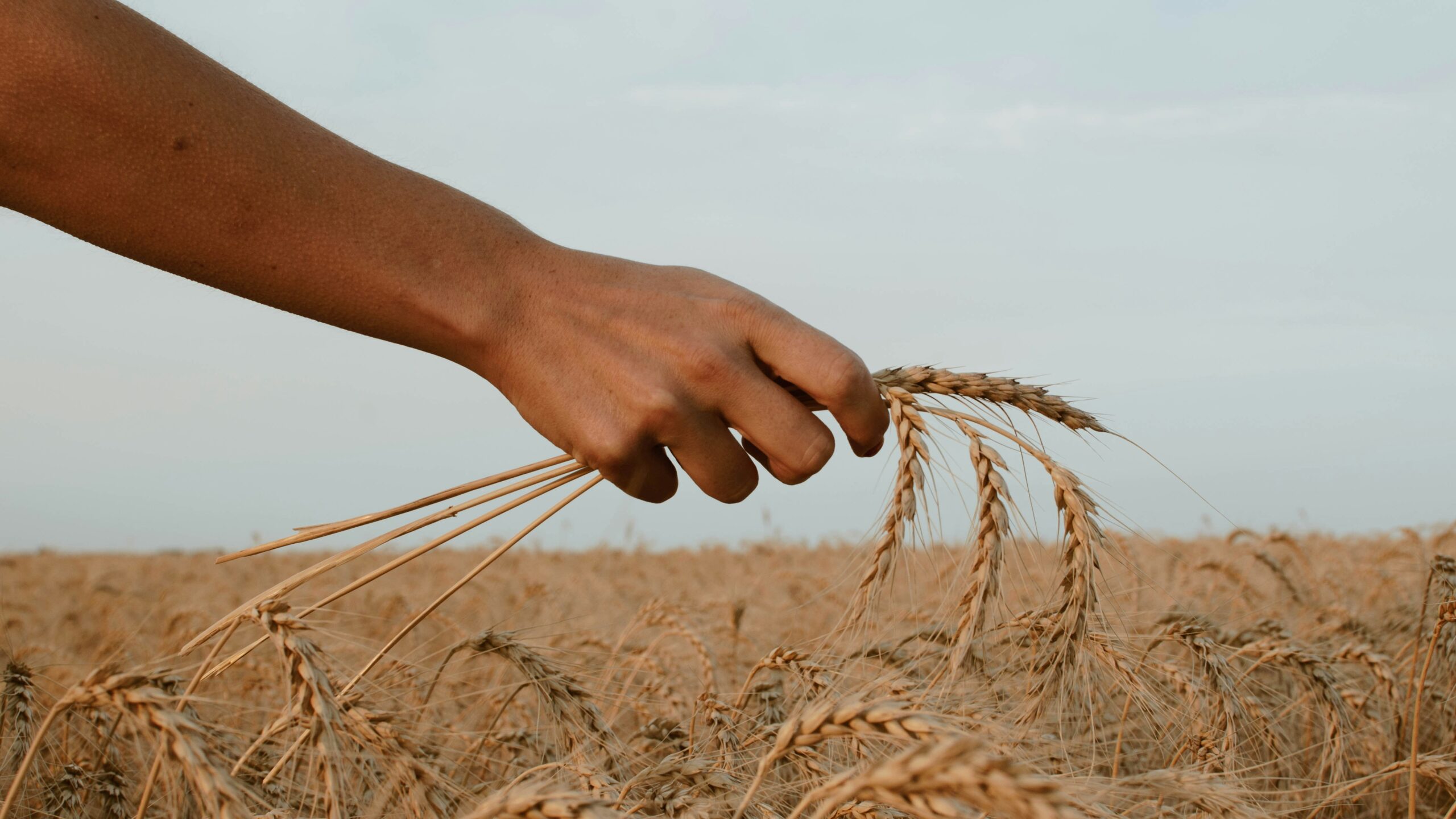
As we approach Autumn many churches will be making plans to celebrate Harvest. School-day memories recall for me the annual walk to the local church with the whole class carrying some sort of vegetable or fruit. It was still the era of garden vegetable plots and allotments that were a remnant of the continuing food rationing after the war, so at times there was a little friendly competition between parents to send their child with the largest vegetable they had grown.
The concept of the Harvest Festival is deeply rooted in the pages of the Old Testament. The land’s rhythm shaped the people’s lives; the cycles of sowing and reaping were marked by festivals that gave thanks to God for sustenance and abundance. The most significant of these festivals were the Feast of Unleavened Bread (which includes Passover), the Feast of Weeks and the Feast of Tabernacles. Each was linked to a particular stage of the agricultural year; it was also commanded that the men must attend all three which is why they are known as the three major pilgrimage festivals.
Three times a year all your men must appear before the LORD your God at the place He will choose: at the Festival of Unleavened Bread, the Festival of Weeks and the Festival of Tabernacles. Deuteronomy 16v16
Passover commemorates the Israelites’ liberation from Egyptian slavery and is immediately followed by the Feast of Unleavened Bread which lasts for seven days. The eating of no leaven (yeast) was to represent their hasty departure from Egypt. (See Exodus 12:1-19)
“Celebrate the Festival of Unleavened Bread, because it was on this very day that I brought your divisions out of Egypt. Celebrate this day as a lasting ordinance for the generations to come. Exodus 12v17
The Feast of Weeks – also known as Feast of Harvest and Day of Firstfruits – fell on the fiftieth day after the Feast of the Passover. At Passover the ‘sheaf of the wave offering’ had been offered from the barley harvest; on this festival the offering would be made from the first of the wheat harvest. (See also Leviticus 23:15-17)
“Celebrate the Festival of Weeks with the firstfruits of the wheat harvest, and the Festival of Ingathering at the turn of the year. Exodus 34v22
In the New Testament the festival is known as Pentecost and in Acts 2:1-4 we read of the fulfilment of Jesus’ promise when the Holy Spirit was poured out on the disciples.
“But you will receive power when the Holy Spirit comes on you; and you will be My witnesses in Jerusalem, and in all Judea and Samaria, and to the ends of the earth.” Acts 1v8
The Feast of Tabernacles celebrated the end of the agricultural year. It was the most joyful of the festivals, coinciding with the fruit and grape harvests usually around September/October. During the seven-day festival the people lived in temporary shelters (Tabernacles) to remember their ancestors’ wanderings in the wilderness after their exodus from Egypt. (See Leviticus 23:33-43)
In the Gospels, Jesus frequently refers to the harvest as being the harvest of souls. He talks to His disciples of the need to reach out with the Gospel to those who are ripe to hear, and He also talks of the coming of the end of the world and the final harvest.
Then He said to His disciples, “The harvest is plentiful but the workers are few. Ask the Lord of the harvest, therefore, to send out workers into His harvest field.” Matthew 9v37-38
“Don’t you have a saying, ‘It’s still four months until harvest’? I tell you, open your eyes and look at the fields! They are ripe for harvest. Even now the one who reaps draws a wage and harvests a crop for eternal life, so that the sower and the reaper may be glad together. Thus the saying ‘One sows and another reaps’ is true” John 4v35-37
In explaining the parable of the Tares He said, “The harvest is the end of the world”
Then He left the crowd and went into the house. His disciples came to Him and said, “Explain to us the parable of the weeds in the field.”
He answered, “The one who sowed the good seed is the Son of Man. The field is the world, and the good seed stands for the people of the kingdom. The weeds are the people of the evil one, and the enemy who sows them is the devil. The harvest is the end of the age, and the harvesters are angels.” Matthew 13v36-39
And so the Harvest continues, and it is something we can all be a part of. We don’t have to be preachers or missionaries to affect people in our lives. A gentle voice, the retelling of our own testimonies or practical help are all ways of sowing seeds.
“Thus the saying ‘One sows and another reaps’ is true”